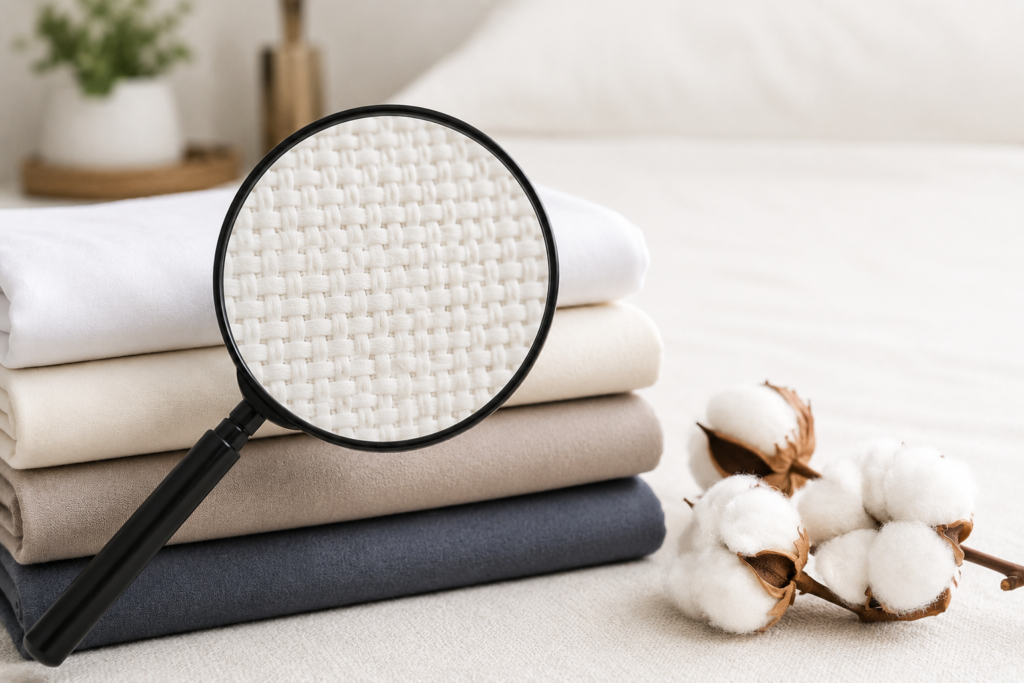
“600 thread count” sounds like a meaningful number until you start comparing sheets and see everything from 200 to 1,800 advertised, sometimes at similar prices. Thread count is one of the most misunderstood specs in bedding — useful information, but only when you know what it’s actually measuring.
What Thread Count Actually Measures
Thread count is the number of horizontal and vertical threads woven into one square inch of fabric. In theory, more threads means a denser, smoother weave. In practice, it’s only one factor in how a sheet actually feels and holds up — and it’s the easiest one for manufacturers to inflate or misrepresent.
Is Higher Thread Count Always Better?
The Point of Diminishing Returns
Quality generally improves as thread count rises from very low numbers up through roughly 400–600, where cotton sheets tend to feel noticeably smoother and more substantial than cheap 150-200 thread count fabric. Past that range, though, the improvement flattens out — an 800 thread count sheet doesn’t necessarily feel meaningfully better than a well-made 600 thread count one, and claims above 1,000 are frequently achieved by counting multi-ply threads in ways that inflate the number without actually improving the fabric.
Fiber Quality Matters More Than the Number
A 400 thread count sheet made from long-staple Egyptian cotton will typically outperform an 800 thread count sheet made from short-staple fiber. Staple length — how long the individual cotton fibers are — determines how smooth and durable the finished thread is, and that has more to do with how a sheet feels and lasts than the raw thread count number does.
Sateen vs. Percale: Two Different Feels at Similar Thread Counts
Weave style changes the feel even more than thread count does. Sateen is woven so more thread surface faces up, giving it a silky, slightly lustrous feel and a bit of drape — this is the weave most hotel-style sheets use. Percale uses a simple over-under weave that produces a crisper, more matte, cotton-like hand, similar to a quality dress shirt. Neither is objectively better; it’s a preference between silky-smooth and crisp-and-cool.
Why 600 Thread Count Is a Sweet Spot
600 thread count cotton sateen sits right at the point where quality has meaningfully improved over budget sheets, without paying a premium for thread counts that don’t translate into a better night’s sleep. It’s dense enough to feel substantial and smooth, breathable enough not to trap heat, and durable enough to hold up to weekly washing for years.
How to Spot Inflated Thread Count Claims
- Numbers above 1,000 on cotton sheets are worth double-checking — genuine single-ply cotton rarely gets there without multi-ply counting tricks.
- A very high thread count at a very low price is a mismatch worth questioning.
- Look for the fiber type (Egyptian cotton, Pima cotton, etc.) alongside the thread count — the number alone doesn’t tell the whole story.
What to Actually Check Before Buying Sheets
Thread count is a useful data point, but fiber type, weave (sateen vs. percale), and how the sheet actually stays on your mattress matter just as much for day-to-day comfort. A gorgeous 600 thread count sheet that slides off the corner by morning still isn’t doing its job — which is worth keeping in mind alongside the fabric spec itself. Sleep Tight’s zipper fitted sheets pair 600 thread count Egyptian cotton sateen with a zipper closure, so the fabric quality and the fit are both covered.
Cotton Types: Egyptian, Pima, and Upland
Beyond thread count and weave, the type of cotton itself affects quality. Egyptian cotton is known for extra-long fibers that produce an especially smooth, durable thread. Pima cotton (grown mainly in the US and Peru) is similarly long-staple and a close competitor in quality. Upland cotton, the most common variety grown worldwide, has shorter fibers and is typically used in more affordable, everyday sheets. None of this shows up in the thread count number itself — it’s a separate spec worth checking alongside it.
How Weave and Fiber Combine to Determine Feel
The softest, most durable sheets combine a good fiber (long-staple cotton), a quality weave (sateen or percale, made well), and a reasonable thread count — usually 300-600 for percale, up to around 600-800 for sateen. Chasing the highest thread count number alone, without checking fiber and weave, is how people end up disappointed by an “800 thread count” sheet that still feels thin and scratchy.
A Simple Way to Shop Without Getting Lost in Numbers
Rather than comparing thread count numbers across brands, it’s more useful to check three things together: the fiber type (long-staple cotton is worth the small premium), the weave you prefer (sateen for silky, percale for crisp), and — just as important — how the sheet actually stays on your mattress once it’s been washed a few times. A sheet that gets all three right is a better purchase than one that only wins on the thread count label.
Final Thoughts
Thread count is worth knowing, but it’s not the whole story. Fiber quality, weave, and how well the sheet actually stays fitted to your mattress all matter just as much as the number on the label.