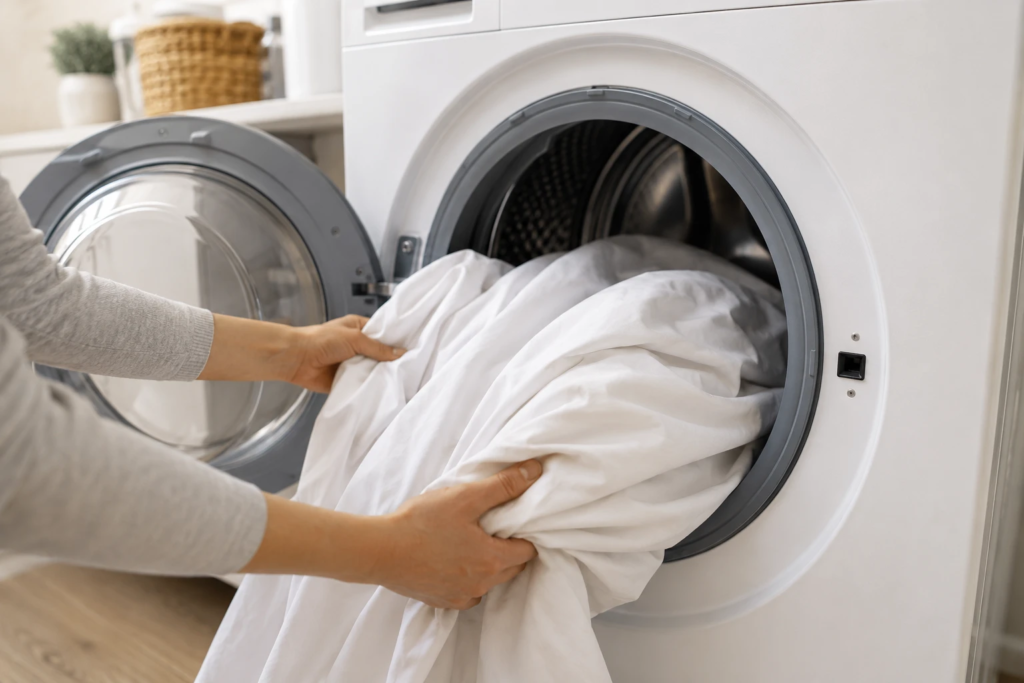
“How often should I wash my sheets?” is one of those questions everyone has an opinion about and almost nobody actually follows consistently. Here’s a straightforward answer, plus what actually determines whether your schedule should be more or less frequent.
The Short Answer
Once a week is the general recommendation for most people, based on how quickly sweat, skin cells, and oils build up on bedding overnight. That said, “once a week” is a starting point, not a strict rule — your actual ideal schedule depends on a few personal factors.
What Actually Builds Up on Your Sheets
An average person sheds a surprising amount of dead skin overnight, sweats even on cool nights, and transfers hair and body oils to their sheets continuously. Over a week, that adds up to a fair amount of buildup — food for dust mites, which is part of why regular washing matters beyond just freshness.
Factors That Change the Schedule
Sleeping Without Pajamas or Sweating More
If you sleep without pajamas, run hot, or live somewhere warm without much air conditioning, washing every three to four days keeps things noticeably fresher than stretching to a full week.
Pets on the Bed
Pets add dander, outdoor dirt, and their own oils into the mix. If your pet sleeps on the bed, washing every few days rather than weekly is worth considering, especially for anyone with allergies in the house.
Allergies or Sensitive Skin
Dust mite allergens are one of the more common indoor allergy triggers, and they thrive in bedding that goes too long between washes. If allergies or skin sensitivity are a factor, a tighter schedule (every 3-5 days) can make a real difference.
How to Wash Sheets So They Last
Water Temperature
Warm water (around 130°F) is generally enough to handle sweat, oils, and dust mites without the excess wear that very hot water causes over time — hot water is best reserved for illness or heavy soiling rather than every routine wash.
Detergent and Fabric Softener
A moderate amount of detergent is plenty; overloading actually leaves residue that can trap odor and irritate skin. Fabric softener is worth skipping altogether on cotton sheets — it coats the fibers and reduces both breathability and how the fabric feels over time.
Drying
Tumble dry on low to medium heat. High heat dries faster but is the single biggest factor in breaking down elastic and weakening cotton fibers over repeated washes.
Caring for a Zipper Fitted Sheet Specifically
Unzip a zipper fitted sheet fully before washing so the zipper track isn’t under tension while tumbling in the machine, and avoid ironing directly over the zipper. Otherwise, the same warm-wash, low-heat-dry routine that’s good for any quality cotton sheet applies here too.
Signs Your Sheets Need Washing Sooner Than Planned
A few signals are worth acting on even if it’s not officially wash day: a noticeable odor, visible spots or stains, or anyone in the house coming down with a cold or stomach bug (in which case washing bedding in hot water right away is worth the exception to the usual warm-water rule).
What About Pillowcases and Duvet Covers?
Pillowcases are in direct contact with your face and hair oils every night, so many people find washing them even more often than the fitted sheet — every 3-4 days — makes a noticeable difference, especially for anyone prone to breakouts or allergies. Duvet covers, which have less direct skin contact, can typically go two to three weeks between washes.
Building a Schedule You’ll Actually Stick To
The best washing schedule is the one you’ll actually maintain. Picking a fixed day — laundry Sunday, for example — turns sheet washing into a routine instead of a task you have to remember to schedule, and pairs naturally with a quick sheet-change method if you’re using a system that makes that part fast too.
A Simple Weekly Routine
Strip the bed, start the wash on warm, and while it runs, air out the mattress and pillows for a few minutes before remaking the bed — a small habit that helps everything smell fresher between washes, not just right after one.
Does Sheet Material Change the Schedule?
Natural fibers like cotton tend to handle moisture and odor better between washes than synthetic blends, which can trap sweat and develop odor faster. That’s not a reason to stretch your washing schedule with cotton sheets, but it is one more reason quality cotton tends to feel fresher for longer than a budget synthetic sheet on the same schedule.
Final Thoughts
Once a week is a solid default, tightened up if you sweat more, share the bed with pets, or deal with allergies. The bigger lever for how long your sheets actually last, though, is washing them gently — warm water, moderate detergent, no fabric softener, low heat — rather than how often.